
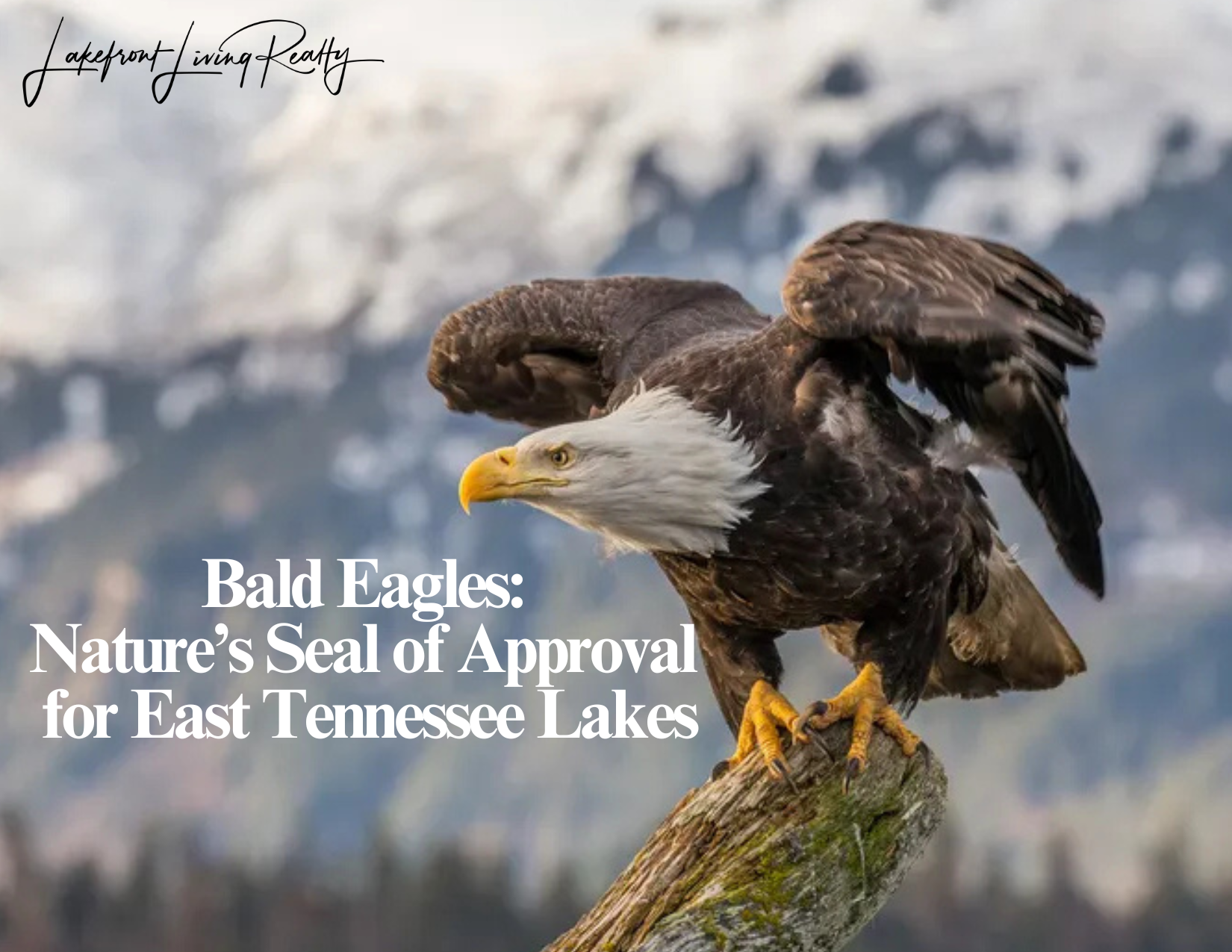
Picture this: you’re sipping coffee on your back porch overlooking Tellico Lake when a bald eagle swoops low across the water, talons outstretched, and snatches up a fish in one fluid motion. It’s the kind of scene that makes your jaw drop—and it’s also a sign that your lake is in fantastic shape.
Bald eagles aren’t just America’s most iconic bird; they’re also one of the best “health check indicators” for East Tennessee’s lakes. If the eagles are happy, chances are the water, the fish, and the entire lake ecosystem are thriving. And when the lake thrives, so does lakefront living.
Why Bald Eagles Are Nature’s Inspectors
Eagles perch at the very top of the food chain, which means their survival depends on everything below being in balance. A strong eagle presence usually means:
- The Water is Clean – Clear, oxygen-rich water supports healthy fish. Eagles only stay if the buffet is fresh.
- Fish Are Plentiful – Bass, trout, and catfish don’t just make for great fishing weekends—they’re also the eagles’ favorite entrées.
- The Shoreline is Healthy – Eagles prefer tall, sturdy trees near the water for nesting. Preserved shoreline vegetation means they’ve got prime real estate too.
In short, bald eagles are like your lake’s very own health inspectors—minus the clipboard.

A Tennessee Comeback Story
Not long ago, seeing a bald eagle in Tennessee was a rare treat. In the 1960s and ’70s, pesticides and habitat destruction nearly wiped them out nationwide. But thanks to conservation efforts, bans on harmful chemicals, and cleaner waterways, the bald eagle population has soared back.
Today, East Tennessee’s lakes—Tellico, Fort Loudoun, Watts Bar, Norris, and Cherokee—are home to dozens of eagle pairs. Winter is especially exciting when migratory eagles join our resident ones, doubling your chances of spotting them.
Quirky Tips, Truths & Tidbits About Eagles and East Tennessee Lakes
Let’s add a little local flavor (and fun):
🦅 Eagle Eyes Are Next-Level – An eagle can spot a fish from more than 2 miles away. So if you think they’re eyeing your dock party snacks, you’re probably right.
🎣 Your Catch vs. Theirs – Ever lost a trophy fish right at the boat? Eagles rarely miss. Watching one dive is like watching nature’s version of Top Gun.
🏠 Eagles Like Good “Lakefront” Too – They won’t nest in scraggly trees or crowded spots. They want tall, quiet perches with a view—sound familiar? (Yes, even eagles want what buyers want in a lakefront home.)
🌊 Lake Levels Matter – TVA manages water levels seasonally, lowering some lakes in winter. This actually helps expose fish, making feeding easier for eagles. (Pro tip: it also creates a perfect time for lakefront homeowners to tackle shoreline maintenance.)
🐟 Healthy Lakes = Healthy Real Estate – Bald eagles are picky eaters, and buyers are picky shoppers. If eagles stick around, it’s proof your lake is balanced. That balance translates into higher property values, better recreational opportunities, and long-term investment stability.
💡 Local Fun Fact – The largest eagle nests on record in Tennessee have been up to 10 feet wide and weighed more than a ton! Imagine explaining that treehouse to your neighbors.
What Bald Eagles Mean for Lakefront Living
When you spot a bald eagle soaring over Tellico or perched along Norris Lake, it’s more than just a breathtaking moment. It’s proof your lake is supporting clean water, abundant fish, and a healthy shoreline. That same balance adds to the lifestyle and value of lakefront living in East Tennessee.
For real estate seekers, eagle sightings are an added bonus—a silent endorsement from nature that says, “Yes, this lake is thriving. You’ll want to live here.”

How You Can Help Keep the Eagles Around
Want to keep those majestic visitors circling your cove? Here’s how homeowners and lake lovers can play a part:
- Protect Shoreline Vegetation – Trees and natural buffers give eagles nesting sites and prevent erosion.
- Reduce Runoff – Use eco-friendly fertilizers and landscaping practices to keep chemicals out of the water.
- Respect Nesting Zones – TVA and TWRA often mark off nesting areas. Keeping your distance ensures future generations of eaglets.
- Support Local Conservation – Volunteer programs and donations help keep eagle numbers climbing.
The Big Picture
Every bald eagle sighting is more than just a thrill—it’s a snapshot of your lake’s overall health. East Tennessee lakes are some of the cleanest and most diverse ecosystems in the Southeast, and the eagles circling overhead prove it.
So the next time you’re out on the dock and see a broad set of wings against the sky, take a moment to appreciate it. That eagle is your lake’s way of telling you: “This water is clean, this ecosystem is strong, and life here is good.”
And if you’re looking for lakefront property, spotting an eagle might just be the best home inspection you’ll ever get—no clipboard required.
Posted By: Polly Harrison – Lakefront Living Realty